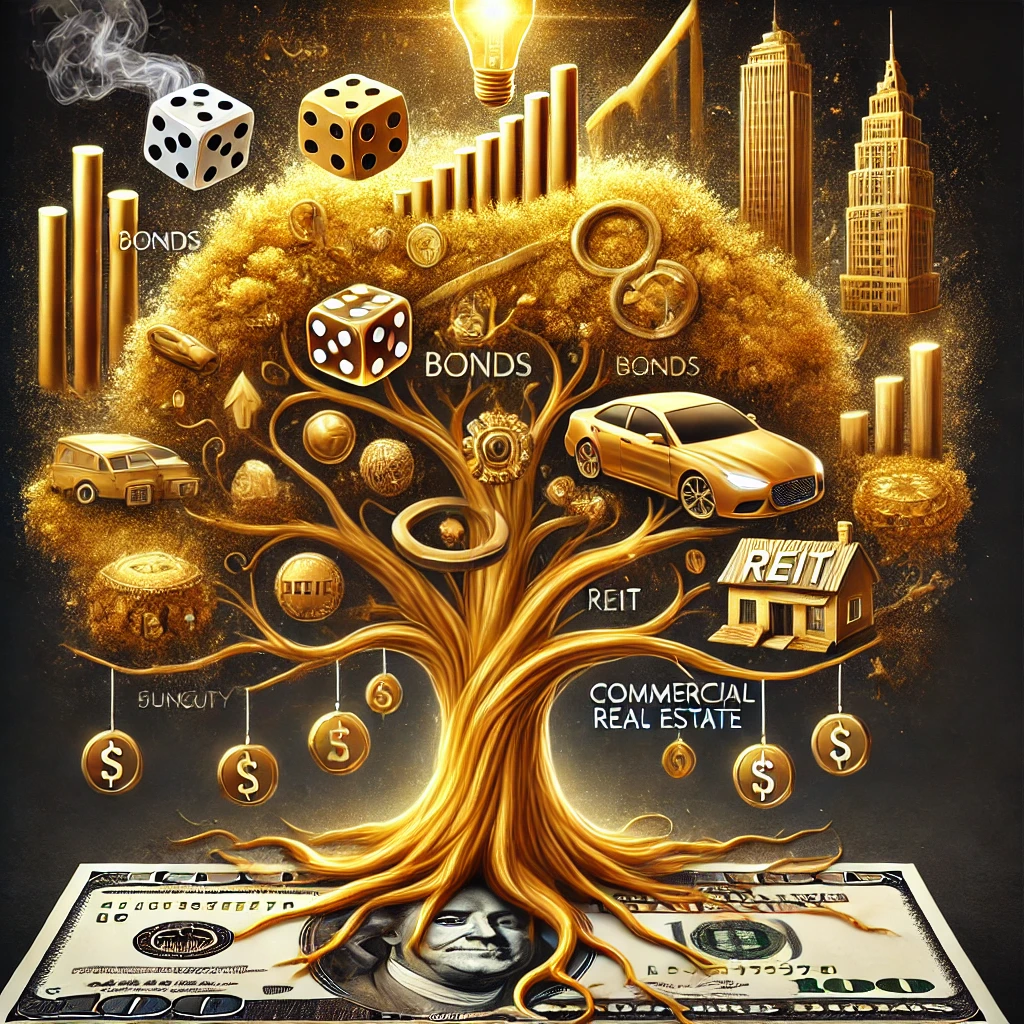
Welcome back, future financial wizards! Today, we’re embarking on a fascinating journey to explore a question many of us ponder: what really happens if we place a significant sum — say, a cool one hundred thousand dollars — into different types of investments? We’re going to dive deep, looking at the inherent risks, the average historical returns, and what the past tells us about where that money might genuinely end up years, or even decades, down the line.
Now, before we jump in, a quick but important disclaimer: this isn’t financial advice. We’re here for an educational breakdown, designed to show how different choices can either quietly erode your hard-earned wealth, diligently protect it, or, excitingly, multiply it many times over. So, grab a notepad, settle in, and let’s unravel the mysteries of investing. This knowledge could truly change the way we see our financial future!
The Wealth Destroyers: Shiny Traps Disguised as Riches
Let’s kick things off with a sobering look at the kinds of “investments” that, despite often looking incredibly appealing on the surface, are actually designed to drain our wealth. These are the bright, sparkling lures that often hide a very dangerous undertow.
First up, we have gambling and lotteries. It’s easy to get caught up in the dream, but collectively, people spend billions chasing infinitesimally tiny odds. When we’re talking about probabilities in the hundreds of millions to one, the cold, hard math just doesn’t work in our favor. Pouring one hundred thousand dollars into these ventures is, fundamentally, asking for that money to disappear. It’s an entertainment expense, not an investment.
Then there are luxury purchases often disguised as assets. Think about that brand-new, high-end sports car, an exclusive status watch, or the latest trendy designer goods. At the moment of purchase, they feel like investments, as if we’re acquiring something valuable. But the cruel reality of depreciation hits fast and hard. That shiny new sports car, for instance, can often lose almost half its value within the first five years alone, let alone what it will be worth in ten or twenty. It’s consumption, pure and simple, not an asset that appreciates.
Finally, we encounter speculative fads. Every decade, sometimes even every few years, brings a new “hot” item everyone seems to be scrambling to get their hands on – from collectible toys that skyrocket in price overnight to digital hype assets that promise the moon. Unless we possess incredibly deep, specialized expertise in these niche markets, we often find ourselves left holding something that, once the hype bubble bursts, no one else wants to buy back at anything close to what we paid.
The common thread weaving through all these categories is crucial: these aren’t assets that are designed to grow in value or pay us back over time. They are, at their core, consumption dressed up as investment, and they are masters at eroding our capital.
Fragile Bets: Holding Value, But Barely Climbing
Next, let’s explore a category of assets that can indeed hold some value, but often prove too unstable or slow-moving to be reliable vehicles for significant wealth creation. These are bets where we might not lose everything, but we’ll certainly find our money crawling instead of robustly climbing.
Precious metals, like gold and silver, are classic examples here. They’ve long been touted as safe havens, acting almost like an insurance policy in chaotic economic times. And it’s true, they can offer some stability when other markets are crashing. However, over decades, their historical returns tend to be quite modest at best, often just keeping pace with inflation. They don’t generate income, like a business or a rental property would, and their price can swing heavily based on investor emotion and global uncertainty, making them an unpredictable growth engine.
Another common scenario we see in this category is owning a single rental property. On paper, it looks fantastic: tenants pay rent, and we build equity over time. It sounds like a surefire path to passive income. But the reality with just one property can be surprisingly fragile. One extended vacancy, one major, costly repair (think a new roof or a burst pipe), or a sudden rise in interest rates can easily flip the entire investment upside down. Without the scale of multiple properties to spread the risk, a single rental can become a source of stress and unexpected expenses, rather than consistent wealth.
With one hundred thousand dollars placed into these types of assets, we might not face utter ruin, but we’ll often find our money just treading water, making slow progress, and vulnerable to external shocks.
The Middle Ground: Stability, But Limited Acceleration
Now we arrive at what we might call the “average” territory. These choices are unlikely to ruin us, which is a big plus, but they also won’t typically make us wealthy on their own. They offer security and modest returns.
Government bonds are a prime example here. They are generally considered an extremely safe bet, backed by the full faith and credit of nations, and they pay out steady interest. The significant tradeoff, however, is that their growth is historically quite slow—often just a few percent above inflation. They’re great for preserving capital and generating predictable, low-risk income, but not for turbocharged growth.
REITs (Real Estate Investment Trusts) allow us to buy into diversified property markets through shares traded on stock exchanges. They often pay nice dividends, giving us a share of real estate income without direct landlord headaches. However, we should be aware that REITs can be quite sensitive to economic cycles and interest rate fluctuations, meaning their share prices can be volatile, even if the underlying properties are stable.
Finally, we have collectibles with expertise. This category includes rare art, classic cars, and vintage watches. If we truly know the market, spend years researching, and have an eye for authentic value, these items can rise significantly in value. But there’s a huge catch: liquidity is a major challenge. Selling these items quickly without incurring a loss, or worse, finding a buyer at all, can be incredibly difficult. It’s a highly specialized niche, not a general wealth-building strategy.
In this range, our one hundred thousand dollars will most likely hold its ground, but it won’t accelerate our wealth significantly unless it’s strategically paired with other, higher-growth engines in our portfolio.
Solid Builders: The Foundation of Sustainable Wealth
Here’s where the real foundation of many successful, long-term portfolios begins to take shape. These are the assets that work steadily, reliably, and powerfully for us over time.
Index funds are a cornerstone for many. By investing in an index fund, we are essentially owning a tiny slice of the entire market, whether it’s the S&P 500 or a global stock index. This removes the guesswork of picking individual stocks. Historically, broad stock indexes have delivered impressive annual returns, often averaging around 10% per year over long periods. Over decades, the magic of compounding does the heavy lifting, turning modest sums into substantial wealth.
Next, we look at dividend-paying companies. These are often established, financially sound firms with a long history of increasing their payouts to shareholders. Investing in them provides us with both potential share price appreciation and a steady stream of income. Those regular dividend checks arrive whether the stock market is booming or experiencing a downturn, providing both cash flow and a reinvestment opportunity.
And when it comes to real estate, we shift from the “fragile bet” of a single property to small real estate portfolios. Instead of just one rental, we might own several. Once we spread the risk across multiple units, a single vacancy, a difficult tenant, or an unexpected repair stops being catastrophic. The diversified income stream helps smooth out the bumps, making real estate a much more stable and successful wealth builder.
If we put one hundred thousand dollars into these types of assets, we are reliably building wealth over time. These assets aren’t just for the ultra-rich; they work steadily and powerfully for ordinary people committed to a long-term strategy.
High-Potential but Demanding: For the Experienced Player
These are investments that offer significant upside potential, but they come with higher barriers to entry and are generally not beginner-friendly. They require more capital, more expertise, or a longer time horizon.
Private equity and venture capital fall into this exciting but exclusive realm. Historically, the returns from these private investments have often beaten public market returns. However, the entry price is typically steep, requiring millions, and our money often gets locked up for years, sometimes a decade or more, before we see a return.
Franchise ownership offers another path to significant wealth. Buying into a proven brand with established systems and customer recognition can indeed produce six-figure profits annually. But the setup costs often start in the hundreds of thousands, sometimes even millions, including franchise fees, build-out, and initial inventory. It’s a business, not just an investment.
Then there’s commercial real estate, which encompasses apartment complexes, office buildings, and shopping centers. These scale income far beyond what a single residential rental can achieve. However, even a modest commercial property requires substantial upfront capital, often in the multi-million-dollar range, and deep knowledge of the specific market.
A hundred thousand dollars here might not be enough to buy a dominant stake, but it can sometimes get us a small limited partnership share or an entry-level position, often alongside other investors.
The Wealth Multipliers: Where Fortunes Are Forged
Finally, let’s explore the truly transformative categories – the spaces where fortunes are most often made, where our money can truly work for us, not the other way around.
At the top of this list is owning a business. This is not just an investment; it’s a creation. More millionaires and billionaires are created through entrepreneurship than any other category. Profitable companies generate consistent cash flow now and possess the incredible potential to be sold later for many times their annual earnings. Here, our $100,000 might be seed capital, or it might be the starting point for a small venture that grows into something enormous.
Closely related is equity in fast-growing companies. This often involves being an early investor or an employee who holds shares (stock options or grants) in successful startups. If that company goes on to achieve massive success or a public offering, the returns can be truly life-changing, turning those initial shares into immense wealth.
And in our modern age, we have digital assets that scale. Think online platforms, software-as-a-service (SaaS) businesses, or content businesses (like successful online courses or media sites). These setups can reach audiences at near-zero marginal cost, allowing revenue to multiply exponentially without a proportional increase in effort or resources. Our hundred thousand could fund initial development, marketing, or talent acquisition for such a venture.
This is where leverage truly kicks in – where our money, technology, or other people’s efforts work for us, freeing us from the direct exchange of our time for money.
Where Will Your $100,000 Go?
So, what happens to one hundred thousand dollars really, truly depends on where we choose to place it. If we put it into the traps, it’s likely to disappear. In fragile bets, it will often stall or face unexpected hurdles. If we commit it to solid builders, it will reliably compound and grow over time. And in the highest tiers of ownership, entrepreneurship, and scalability, it possesses the immense potential to become generational wealth.
The real secret to building wealth isn’t about chasing the latest hype or gambling on a long shot. It’s about consistency, patience, continuous learning, and, critically, avoiding the illusions that look good on the surface but ultimately hollow out our financial future.
We hope this breakdown has given you a clearer picture of the investment landscape! We’d love to hear from you: which category would you personally feel most comfortable putting your money into? Drop a comment below and share this article with a friend who’s curious about investing. Until next time, thanks for reading, and let’s keep building our financial intelligence together!